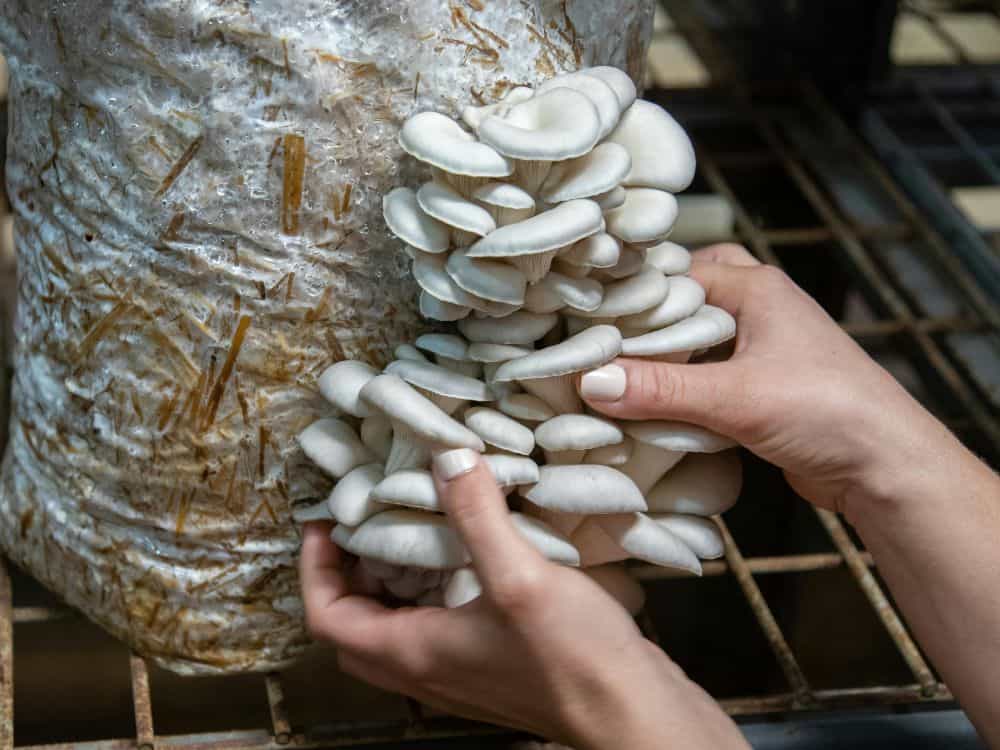
Oyster mushrooms are one of the first species new foragers go after, and I get why. They’re common, they’re delicious, and the fan-shaped cap growing off a dead hardwood is hard to miss. But oyster mushroom identification is trickier than it looks at first glance.
The real danger isn’t that oysters are hard to recognize — it’s that their look-alikes are easy to overlook. Angel wings, jack-o’-lantern mushrooms, and a handful of Crepidotus species all share enough visual overlap to fool a rushed photo. These seven tools help me slow down and get it right.
Quick comparison
| # | Tool | Type | Cost |
| 1 | MushDex | AI scanner + guide | Free |
| 2 | mushroom-identification.com | Web-based ID tool | Free |
| 3 | Shroomify | Visual key app | Free + paid tier |
| 4 | Mushroom Observer | Expert forum | Free |
| 5 | Picture Mushroom | AI scanner app | Subscription |
| 6 | iNaturalist | Community platform | Free |
| 7 | Seek by iNaturalist | Live camera ID | Free |
1. MushDex
mushdex.com
MushDex is the first tool I reach for on any oyster mushroom identification. The three-photo upload matters here: one shot of the fan-shaped cap, one of the decurrent gills running down the stem, and one of the cluster on the wood.
Results come back ranked with confidence percentages. When I upload a true Pleurotus ostreatus, MushDex usually nails it and flags angel wings and jack-o’-lantern in the look-alike panel beside the match.
GPS filtering helps because oyster species vary by region. Pleurotus pulmonarius fruits in summer, P. ostreatus prefers cooler months, and which one you’re holding depends on where you are. MushDex accounts for that.
Free, no scan limits, runs in the browser and on iOS and Android. For oyster mushroom identification, the multi-photo approach and automatic look-alike warnings make it the strongest starting point I’ve found.
Best for: The most reliable first step for oyster mushroom identification.
2. mushroom-identification.com
mushroom-identification.com
When I want a second angle on an oyster mushroom identification without installing anything, I open mushroom-identification.com. Three photo slots, no sign-up, full report in seconds.
The write-up goes deeper than most tools: scientific and common names, edibility, habitat, season, spore print color, and a plain-language breakdown of features like gill spacing and cap texture. For oysters, it notes the anise-like smell and the white to lilac spore print — details that separate the real thing from doubles.
The look-alike section is the part I trust most. It spells out what angel wings and jack-o’-lanterns share with oysters and, crucially, what’s different. That side-by-side is exactly what oyster mushroom identification needs.
There’s also a note on ecological role — oysters are saprotrophic decomposers and mild parasites. It only trails MushDex because it lacks a native app and geographic filtering.
Best for: Thorough oyster mushroom identification reports from any browser.
3. Shroomify
iOS / Android
Shroomify takes a manual approach to oyster mushroom identification, and for learning purposes, it’s the best on this list. There’s no photo scan. You step through a visual key: cap shape, gill attachment, spore color, substrate.
For oysters, that means selecting fan-shaped cap, decurrent gills, white spore print, growing on dead hardwood. The list narrows with each pick, and after a few rounds you’ve memorized exactly which features matter and why.
It works fully offline, which is a real plus when you’re deep in the woods checking a cluster on a fallen elm. The database leans North American and is smaller than the AI tools, and some filters sit behind a paywall.
As a tool that teaches you to ID oysters by observation instead of by phone camera, Shroomify is unmatched. Long-term oyster mushroom identification skills start here.
Best for: Builds real oyster mushroom identification skills through observation.
4. Mushroom Observer
mushroomobserver.org
Mushroom Observer is where I go when an app gives me an oyster mushroom identification I’m not fully confident about. The site’s been running since 2006 and the community knows its Pleurotus.
You upload photos and notes — substrate, tree species, smell, gill color — and experienced members propose names, ask questions, and vote. For oysters specifically, they’ll want to know whether the gills are truly decurrent and what the wood is.
It’s slow. A straightforward P. ostreatus might get confirmed in hours, but anything ambiguous can sit for days. That patience is the whole point. When the regulars agree, the ID holds up.
Free, volunteer-driven, and backed by a massive archive of past observations. As a second-opinion layer for oyster mushroom identification, nothing on the web matches it.
Best for: Expert peer review when oyster mushroom identification gets ambiguous.
5. Picture Mushroom
iOS / Android
Picture Mushroom handles straightforward oyster mushroom identification well. Snap a photo of a clean cluster on hardwood and it’ll usually return Pleurotus ostreatus with a high confidence score and a nicely written species profile.
The profile includes habitat, season, and morphological details, and the photo library has enough angles to learn from. For confirming a textbook oyster, it’s fast and pleasant to use.
My issue is confidence calibration. When I feed it an angel wing or a pale jack-o’-lantern, it sometimes still returns oyster with a high percentage. That’s a problem, because angel wings have been linked to fatal poisonings in vulnerable people.
It’s subscription-based after a short trial, and the upgrade prompts are persistent. Fine as a companion tool for oyster mushroom identification, but I wouldn’t trust it as my only check.
Best for: Quick confirmation for clear oyster finds, less reliable on edge cases.
6. iNaturalist
inaturalist.org
iNaturalist is the slow, careful option for oyster mushroom identification, and sometimes slow is exactly right. You upload photos, the AI suggests Pleurotus, and then real people — hobbyists, researchers, seasoned mycologists — weigh in.
For oysters, the community often asks follow-up questions: what tree, what time of year, any smell? Those details help separate P. ostreatus from P. pulmonarius or P. populinus, which photo-only tools rarely distinguish.
An observation reaches Research Grade only when enough users agree. That takes time, and some look-alike cases stay unresolved. I’ve learned to read that as honesty, not failure.
Free, nonprofit-run, and every record feeds biodiversity research. The local observation map is handy for seeing where oysters have been reported near you this season — a practical scouting tool for oyster mushroom identification.
Best for: Human-reviewed oyster mushroom identification backed by community knowledge.
7. Seek by iNaturalist
iOS / Android
Seek is the lightest option for casual oyster mushroom identification. Hold up your phone and it guesses live, stepping from broad categories toward species as confidence builds.
For a clean, textbook oyster cluster it usually gets to Pleurotus without trouble. When it can’t narrow past genus, it stops, and I appreciate that. Plenty of pale shelf fungi could be one of several things, and Seek doesn’t fake certainty.
No account needed, no data collected, and the badge system makes spotting fungi fun on a family walk. Kids like it, and it gets them looking at dead wood instead of their shoes.
The trade-off is depth. No edibility info, no look-alike warnings, no detailed species profiles. For oyster mushroom identification with any foraging intent, follow up with MushDex or mushroom-identification.com before you pick anything.
Best for: A casual first check, not a foraging-grade oyster mushroom identification tool.
My oyster mushroom workflow
Oyster mushroom identification follows a simple routine for me. Three photos into MushDex first — cap, gills, cluster on the wood. Then the same photos into mushroom-identification.com for a second read. When both say Pleurotus ostreatus and the look-alike panel doesn’t flag anything close, I feel good about the name.
When there’s any hesitation — gills that look too thin, wood that seems wrong, a cap color I’m not used to — I post to iNaturalist or Mushroom Observer and give it a day. Oysters have dangerous doubles, and patience is cheaper than a hospital bill.
And the standing rule: no tool replaces hands-on experience. If you’re new to foraging oysters, go out with someone who’s done it for years before you eat anything. Your local mycological society is the right place to start. When in doubt, leave them on the log.